
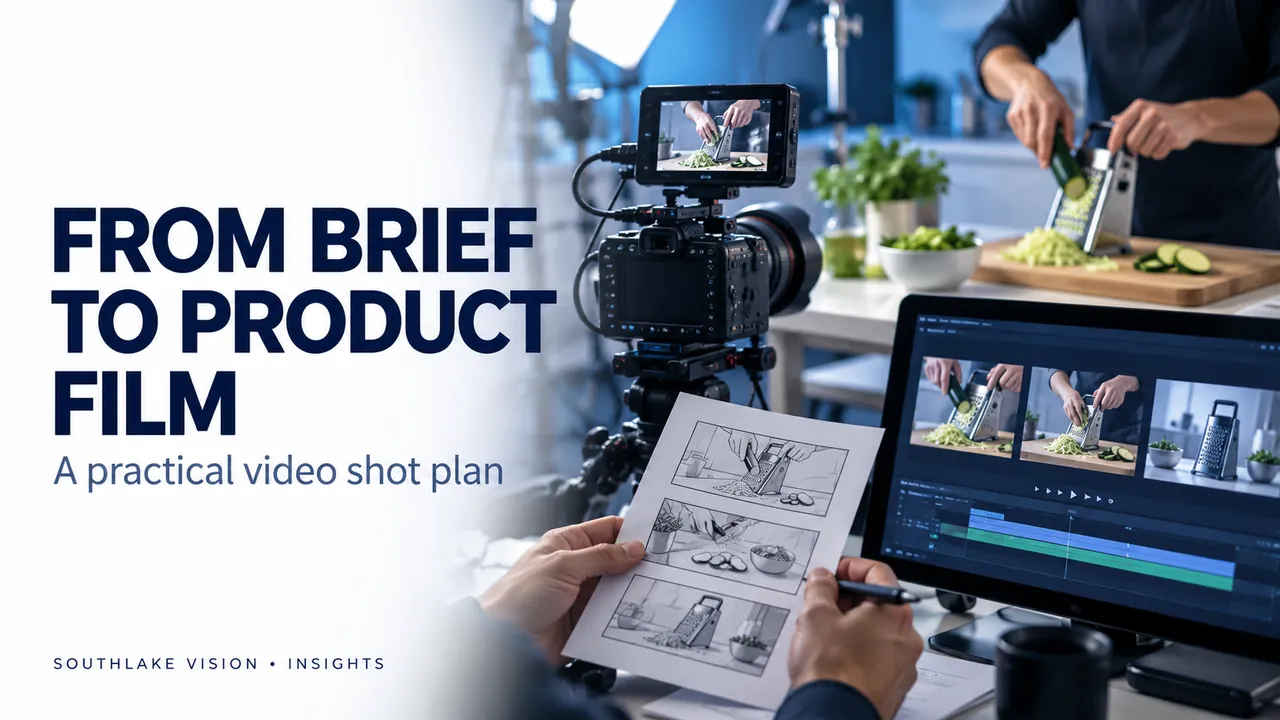
Editorial cover illustration — Southlake Vision.
Choose one primary communication goal
Product video production services can create demonstrations, brand films, launch content and social edits. These formats solve different problems. Begin by deciding what a viewer should understand or do after watching. An unfamiliar product may need a clear demonstration; a familiar item may need a distinctive material or use story. Identify the audience and placement alongside the goal. A focused brief gives the script and edit a useful basis for deciding what belongs in the film.
Write the message before the shot list
Outline the product introduction, the key action or feature and the closing message. Give each claim a source in the approved product information. Avoid trying to include every feature in a short edit. For a functional item, show the action in a sequence the viewer can follow: setup, use and visible outcome. When the product needs context, establish the setting quickly and keep the item visible enough to inspect.
Turn the outline into filmable scenes
A shot plan should identify framing, action, product state, props and any on-screen copy. Note whether a close-up requires repeated movement, a second sample or specialist handling. Appliances may need power and safe operating conditions; food scenes need preparation and continuity; textiles need consistent styling between takes. Confirm models, wardrobe, set requirements and voiceover before filming. Resolving these dependencies in advance helps prevent missing shots that only become apparent during editing.
Design for the intended screen
Agree aspect ratios and placements before production. A landscape product-page film and a vertical social video may share some material, but each needs suitable framing and pacing. Keep important actions clear of interface overlays and leave planned space for captions. Decide whether the message must be understood without sound. If narration is included, approve the language, pronunciation and script. Confirm whether subtitles, music licensing and additional language versions are part of the quote.
Separate the main film from additional edits
An extra short video requires editorial decisions even when it uses the same footage. Specify the number, duration range and purpose of each edit, along with any new hooks, captions or closing screens. Agree the revision process for the storyboard, first cut and final files. Distinguish changes to editing from requests for new filming. Identify whether raw footage and project files are included, and confirm the usage terms for talent, music and other licensed assets.
Check the finished video as a product explanation
Watch for correct operation, accurate labels and claims that match what the footage shows. Review captions, audio, colour and continuity, then test each export in its intended placement. Do not measure creative quality only by cinematic effects; the viewer should understand the product. Southlake Vision can coordinate product video with photography and Amazon design, using one approved product brief while planning the dedicated shots and edits needed for each channel.
Frequently asked questions
Can a single shoot produce horizontal and vertical videos?
Often, if both are planned from the start. Some actions and compositions need separate takes to stay clear in each orientation.
Is a longer product video always better?
No. Choose the length around the message, viewing context and required explanation. Remove shots that do not contribute to that purpose.