
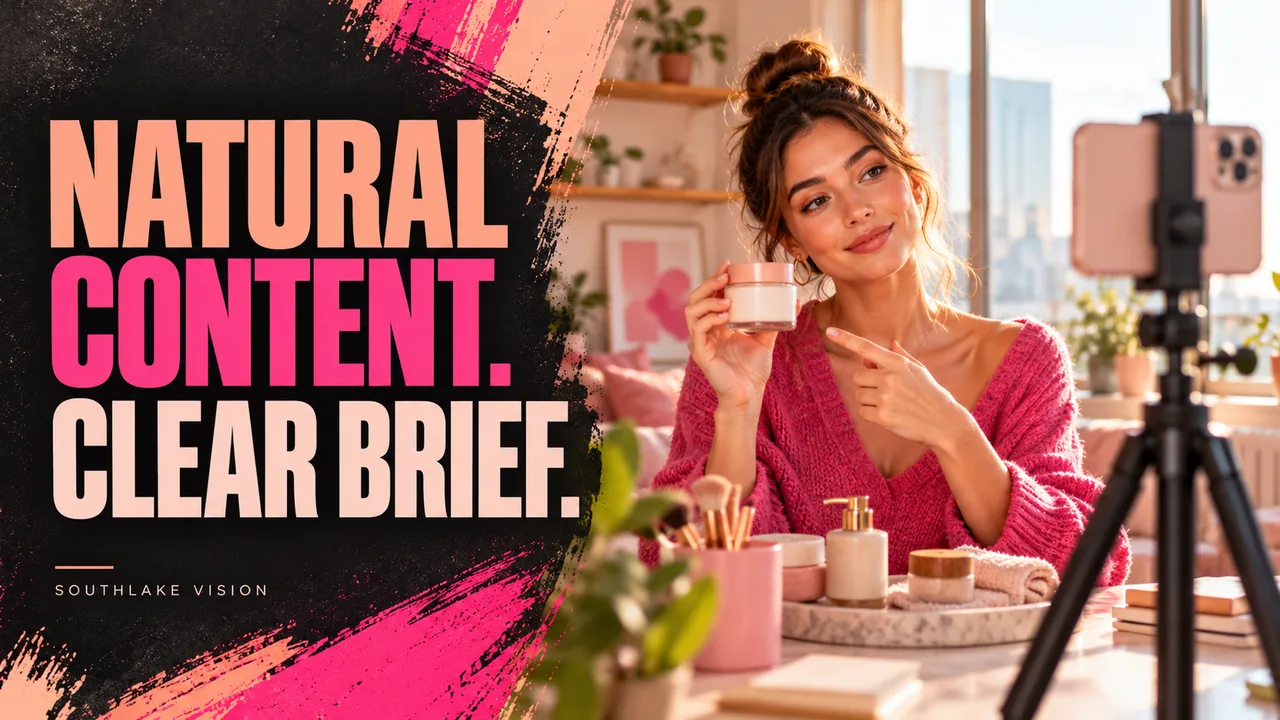
Original editorial cover illustration — Southlake Vision. Product imagery is illustrative.
Define what creator style means for this project
UGC product video services can cover natural demonstrations, presenter explanations, or creator led social content. These formats should not be confused with independent customer reviews. A paid performer can demonstrate a product honestly, but should not invent a personal purchase, long term use, or result that did not occur. Decide what the speaker can truthfully say before developing a script.
Describe the desired communication in concrete terms: a relaxed explanation of the included pieces, an ordinary room showing the product’s scale, or a short sequence of hands using the mechanism. “Authentic” is not a complete brief. It needs observable direction for performance, setting, language, and the product information the viewer should understand. Clear boundaries make the creator’s natural delivery more useful.
Choose the creator around the task
Casting should reflect the audience and the practical action. A creator demonstrating a kitchen product needs to handle it comfortably and explain the relevant steps. A model’s appearance alone does not establish language ability, presentation confidence, or familiarity with a mechanism. Request appropriate casting references and agree what qualities matter for the specific role.
Confirm availability, location, language, wardrobe, and any practical restrictions before promising a performer internally. For Southlake Vision UGC production, booking details and usage need project confirmation. If hands are prominent, discuss grooming and accessories; if full body movement matters, consider the set and framing. Avoid demographic assumptions about who can use a product, and choose casting based on a defined creative purpose.
Give the creator a usable message hierarchy
A brief works better when it separates mandatory facts from suggested language. List the product name, approved feature statements, important operating points, and any words that must be pronounced precisely. Then indicate where the creator may use their own phrasing. A script that dictates every pause can undermine the natural style the brand requested.
Plan an opening, a visible demonstration, a useful detail, and an ending suitable for the intended placement. For example, a hypothetical tabletop organizer film could begin with an untidy surface, show the real product being filled, and conclude with the organized result. Label this as a staged demonstration. Do not have the creator imply an independent personal experience when the scene has been commissioned.
Use a believable setting with controlled distractions
A natural setting still requires production choices. Remove unrelated branding, private information, distracting reflections, and objects that compete with the product. Keep the room plausible for the intended use. A pristine decorative shelf might suit a design focused introduction, while a practical worktop may explain operation more clearly. Neither setting should falsely imply features or capacity.
Lighting should preserve a comfortable human appearance and show the product accurately. Overly dramatic contrast may obscure a label; very flat illumination can make a textured surface look artificial. Record a short performance and product test before the full take. Check speech intelligibility, background noise, reflection control, and whether the performer’s movement covers the feature at the moment it is explained.
Set firm boundaries for statements and demonstrations
The brand should supply evidence for product claims and confirm which wording has been approved for the campaign. A creator should not improvise medical outcomes, safety assurances, or performance guarantees. If a statement is uncertain, replace it with an observable action or a factual explanation supported by the product information. The production brief should identify a person authorized to resolve questions.
Show normal operation using the approved sample. Do not edit several attempts into a misleading suggestion of effortless performance, or substitute another material to exaggerate a result. Where a scene is staged, keep the presentation consistent with an advertisement or demonstration. Any disclosure requirements should be checked for the intended markets and placements before the final content is distributed.
Confirm usage and adaptation before booking
Commercial usage is a production input because it affects casting, permissions, and price. State the intended channels, territories, duration, paid advertising plans, and whether the brand expects to create additional edits. Also discuss creator account posting or account based advertising separately if required. None of these permissions should be presumed to last forever.
Confirm whether the deliverables include final edits, clean versions without text, alternate openings, still frames, or source recordings. Recutting a creator’s speech can change its meaning, so agree a sensible approval process for substantial adaptations. Discuss the proposal through the contact page and keep the final usage terms with the asset record. A clear agreement is more useful than a vague promise of complete ownership.
Review for natural delivery and factual clarity
Review performance and information as separate qualities. A confident delivery can still state the wrong specification; an accurate script can still sound forced. Ask whether the creator’s phrasing feels understandable, whether the product action matches the explanation, and whether the central message survives without the soundtrack. Use timecodes to identify specific passages that need correction.
Agree revision handling before filming, including what requires a new performance rather than an edit. New claims, a different language, or a replacement product can change the work substantially. Southlake Vision’s production process can establish approvals around samples and the confirmed brief. The proposed first draft timetable should reflect creator availability, content complexity, and the number of requested versions.
Connect creator films to the wider campaign
Creator content should add a human explanation to a consistent product library. Match product names, accessory descriptions, and core visual facts with the listing images and service pages. A relaxed presentation can vary in tone without changing the product’s color, dimensions, or included components. Give the editor approved reference images to prevent accidental inconsistencies.
Explore the Southlake Vision homepage for photography, design, and video options that can support the same launch. For your brief, provide the verified product facts, intended audience, examples with written comments, usage requirements, and requested deliverables. The result should be a credible demonstration with a clear commercial purpose, rather than an imitation of a customer opinion that the creator cannot honestly give.
Frequently asked questions
Is a UGC style film the same as a customer testimonial?
No. A commissioned creator demonstration is advertising content and should not invent a personal purchase or unsupported experience. A genuine testimonial requires truthful statements from the actual person involved. Make the intended format and any market specific disclosure requirements clear before filming.
Can we ask for several opening lines?
Yes, if the number and purpose are included in the scope. Different openings can introduce the same truthful demonstration to different audiences or placements. Confirm whether each requires a separate take, text treatment, or edit, and keep all product claims consistent across the variants.
Can the brand use the creator’s image indefinitely?
Do not assume that. Confirm the agreed duration, territories, channels, paid advertising rights, and adaptation permissions in the quote or agreement. Creator posting and account based advertising may have separate conditions. Keep the approved terms with the final files for later campaign planning.