
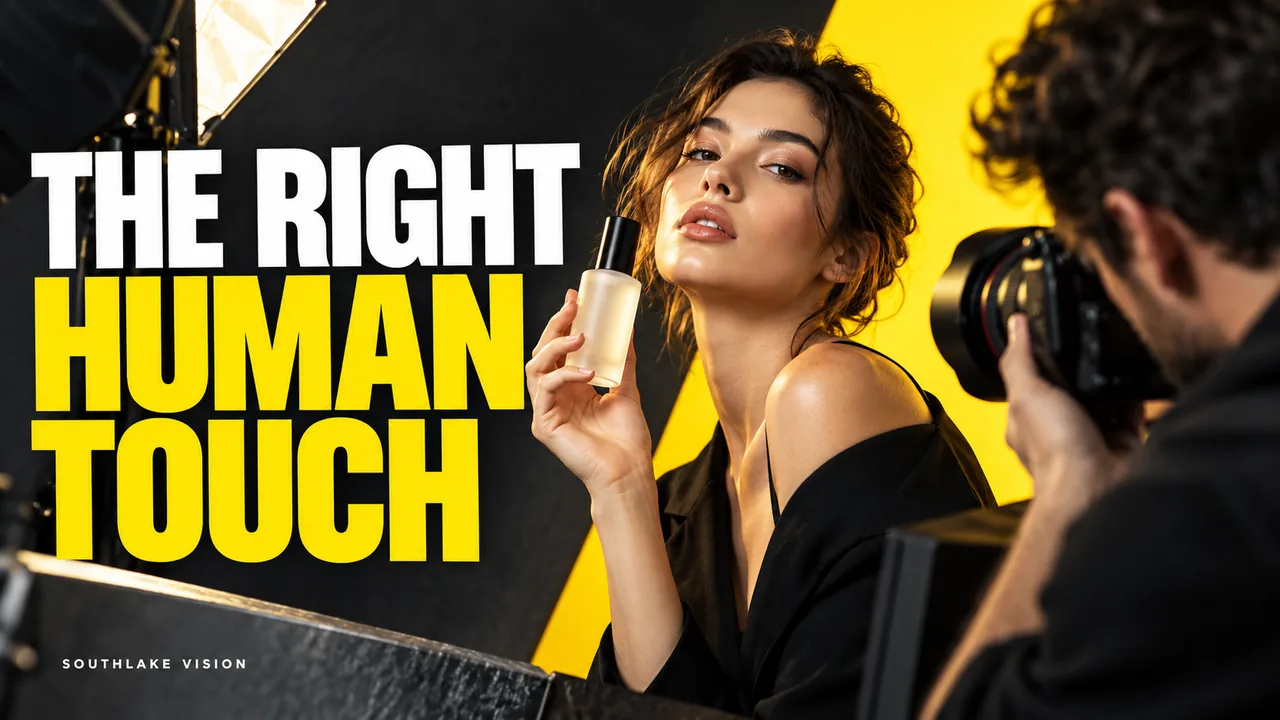
Original editorial cover illustration — Southlake Vision. Product imagery is illustrative.
Decide what the person adds to the image
Product photography with models works best when the person provides useful information. A hand can explain scale, a posture can show how a product is worn, and an interaction can make a mechanism understandable. Before casting, identify the customer question that the person will answer. Otherwise, the model risks becoming an attractive distraction from the item being sold.
Separate product led images from broader brand portraits. The former must keep features and operation readable; the latter may emphasize atmosphere and identity. Both can belong in a campaign, but their acceptance criteria differ. For each requested photograph, state whether the priority is product visibility, fit, human interaction, emotion, or a combination. That decision shapes casting and the shot list.
Cast for movement, presentation, and audience
Start with the physical action and the intended market. A model who looks suitable in a portrait may have limited experience with close hand movements or a repeated assembly sequence. Ask for references that reveal the relevant skill, and discuss language requirements if the project also includes spoken video. Availability must be confirmed before building a fixed schedule.
Southlake Vision’s model selection page can help establish a shortlist, while lifestyle photography services provide the production context. Give the team specific casting criteria and explain their relevance to the product. Avoid relying on age or appearance alone to suggest expertise. If the person is meant to represent a particular role, the direction should remain credible and should not imply qualifications they do not have.
Treat hands as a separate styling requirement
Hands can occupy more of a product image than the model’s face. Discuss nail length, polish, rings, watches, skin preparation, and sleeve coverage before the shoot. The aim is not to impose a universal appearance, but to prevent distracting details from conflicting with the brand’s approved visual direction or obstructing the product.
Prepare a small hand action list: hold without covering the label, turn to reveal the feature, open the mechanism, and place the item naturally. Each action should feel plausible and preserve product proportions. For reflective objects, a hand and sleeve can appear elsewhere in the surface, so test the full frame. Check close views carefully rather than assuming a broad lifestyle approval covers every detail.
Choose wardrobe that supports color and function
Wardrobe needs to work with the product, the setting, and the planned framing. Busy patterns can compete with small objects. A sleeve can obscure a wrist product or catch on a handle. Strongly colored clothing can create unwanted reflections on glass or polished metal. Evaluate these relationships using the actual sample and set palette.
Bring agreed alternatives and record which look belongs to which scene. If several products are photographed together, decide whether consistent wardrobe unifies the collection or a different look helps distinguish the intended use. Clothes should suit the action: a natural seated posture, an overhead hand sequence, and a walking scene all place different demands on fit and movement. Confirm styling responsibilities in the project scope.
Build a shot list around believable interaction
A useful shot list moves from context to information. For a hypothetical skincare package, it might include a person holding the closed bottle, a close view of the dispenser, the actual dispensing action, and the product resting beside the person. Whether application is appropriate depends on the real product instructions and approved creative brief. Do not use posing to imply unsupported results.
Describe where the model looks, where their hands sit, and which part of the product must stay visible. Include a clean product image as a reference for color and geometry. A lifestyle frame can introduce perspective, but it should not distort size so strongly that the object seems larger or smaller than it is. Compare the selected images with the rest of the listing.
Protect comfort, continuity, and production time
Model involvement adds preparation and coordination beyond the moment of exposure. Schedule styling, product rehearsal, lighting tests, breaks, and any scene changes realistically. A model should be able to communicate discomfort or uncertainty during an action. If a product needs special handling, provide clear instructions and suitable supervision instead of relying on improvisation.
Maintain continuity through reference images of wardrobe, accessories, product orientation, and set placement. For combined photography and video, plan when the same action needs still and moving coverage. A pose that works for a photograph may be awkward during motion. Discuss the sequence through the production workflow so product preparation and model booking time are used deliberately rather than lost to repeated resets.
Agree commercial usage before selection
The booking should specify where and how the model’s image will be used. Discuss channels, territories, duration, paid advertising, and any intended adaptations. A fee for a studio session should not be interpreted as automatic permission for every future campaign. Requirements can affect availability and the final booking terms, so raise them before confirming a performer.
Also clarify the deliverables: selected retouched photographs, additional crops, source files where agreed, and any motion work. Retouching boundaries should preserve product truth and a believable human appearance. If later changes could materially alter the person’s image or meaning, discuss permissions rather than treating them as ordinary file edits. Keep the model and usage records connected to the approved asset names.
Approve images with product and person in balance
Review the selected photographs for both communication and accuracy. Can the shopper identify the item? Does the person demonstrate normal use? Are labels visible, proportions believable, and important details sharp enough for the agreed output? Check natural expressions and comfortable hand positions, but avoid sacrificing the essential product information for a stronger portrait.
The Southlake Vision homepage presents connected photography, video, and design services that can share one brief. Send the intended scenes, product instructions, casting references, wardrobe direction, usage requirements, and sample arrival plan through the contact page. Clear planning helps the model serve the product story and makes the finished images easier to use across a coherent commercial library.
Frequently asked questions
Can we book only a hand model?
That may be appropriate when the action and product are the focus. Provide close framing references, grooming requirements, and the exact movements. Availability and booking terms need confirmation. Hands should still be treated as a deliberate casting and styling decision rather than an incidental part of the shoot.
Can model photography and video share a session?
Yes, when both are included in the schedule and coverage plan. Lighting, movement, continuity, and audio can require adjustments between stills and motion. Confirm the complete deliverable list before booking, since adding video later may affect model time and commercial usage requirements.
What should we review before confirming a model?
Review suitable casting references, relevant movement or presentation experience, availability, wardrobe needs, and usage terms. Explain the intended audience and product interaction clearly. A shortlist is a starting point; the production team must confirm the actual booking and any project specific conditions.