
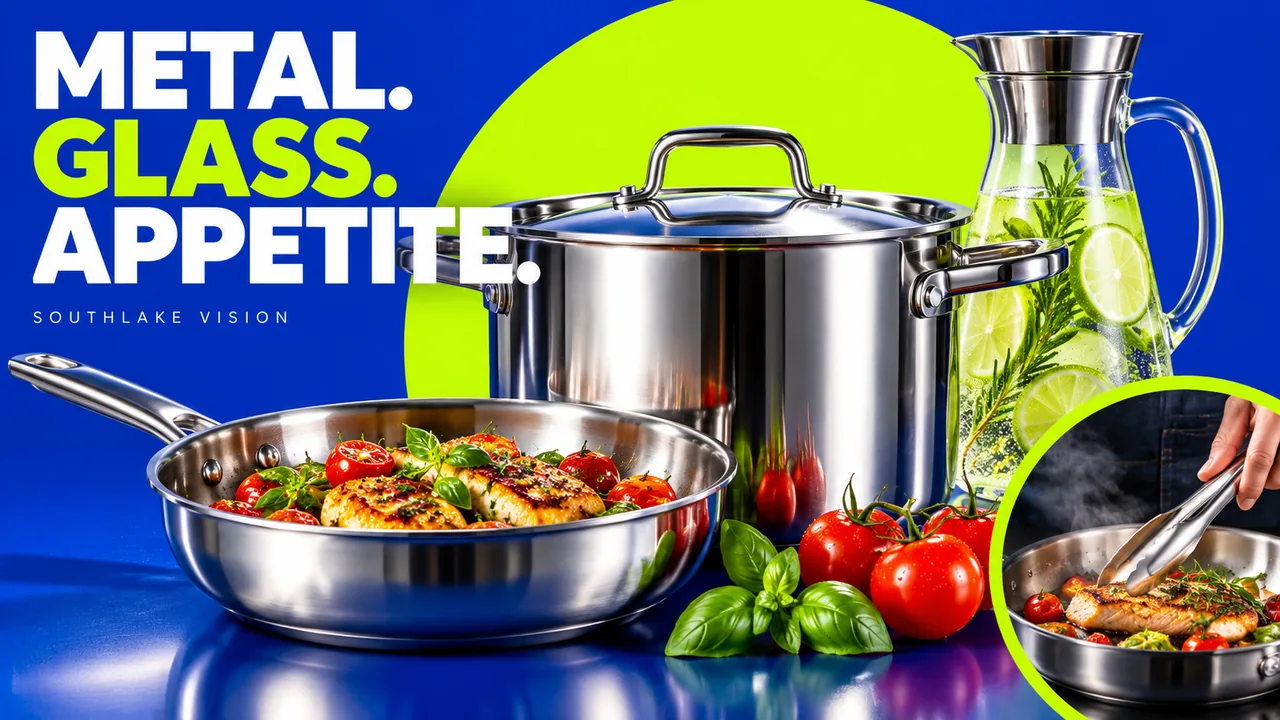
Original editorial cover illustration — Southlake Vision. Product imagery is illustrative.
Create a material evidence sheet for the collection
Kitchenware photography in China for Amazon should help a shopper distinguish what the product is made from and how it behaves during ordinary use. Before discussing a dramatic kitchen set, list the visible evidence the gallery needs: brushed grain, polished curvature, glass wall thickness, lid seating, handle connection or the working surface. Assign a suitable viewpoint to each feature instead of assuming a single attractive angle will describe everything.
A hypothetical steel saucepan with a glass lid is a useful planning example. Its metal body needs a readable contour, the lid needs visible transparent boundaries, and the grip needs an accurate relationship with the hand. The Southlake Vision kitchen portfolio can support a visual conversation, while your actual sample and approved specifications determine which features require dedicated capture.
Light steel so the finish remains identifiable
Brushed steel and mirror-polished steel need different visual cues. For a brushed surface, the direction of the grain should remain apparent without looking like scratches added by aggressive contrast. For a polished surface, controlled reflections should explain curvature without filling the object with distracting room shapes. Ask for a material test before the complete series, including both a broad view and the most demanding detail.
Evaluate the test with the physical finish description beside it. A clean white streak can make two different surfaces look alike if it hides their texture. Conversely, too many dark reflections can make bright steel seem much darker than the sample. Our product photography service can be scoped around these distinctions, with separate views where the chosen hero lighting cannot also reveal the surface faithfully. Keep the test file beside a simple surface map naming the grain direction, curved edges and intentional reflection bands. That record helps the retoucher distinguish an unwanted distraction from a reflection that is doing useful work by describing the material.
Give glass a boundary without inventing a tint
A transparent lid or vessel has several distinct boundaries: outside silhouette, rim, handle and sometimes the water line or internal wall. Check each separately. Overlapping contours can become confusing when a glass lid sits on a reflective pan, so a slight camera adjustment or a second detail view may communicate the construction better than heavy retouching.
Use neutral reference views to check whether colourful props or backgrounds introduce an apparent tint. A fashionable red surface might create a beautiful campaign reflection yet be unsuitable as the only evidence of clear glass. Record the intended role of each treatment. Preserve the actual relationship between thick and thin areas; removing every reflection can erase the very optical cues that tell a buyer how the glass is formed.
Design food actions around the mechanism being shown
Write a food demonstration as an observable action with a clear endpoint. For the hypothetical saucepan, the frame might show a normal grip while lifting the lid, with the handle attachment unobstructed. Food selection should leave that working area readable. The scene should not become a claim about heating speed, coating durability or handling safety simply because the food looks appetising.
Rehearse the action with the actual product instructions and suitable preparation before food styling begins. Identify which surfaces become marked, which pieces need resetting and whether additional samples are justified. Photograph pristine material evidence first where practical, then move into wet or oily scenes. This production order protects detail quality and makes it easier to compare the clean reference with the product shown in use.
Choose the instant that explains real handling
The most dramatic moment is not always the most informative one. A pouring stream may obscure the spout; a hand gripping a handle may conceal its attachment; a garnish can hide the usable cutting area. Review the action in stages and choose the instant when the relevant relationship is visible. If the function requires change over time, use a short sequence rather than forcing everything into one frame.
Keep the hand at a plausible distance and orientation so the product does not appear unusually large or small through perspective. Record the approved configuration between takes. Styling should not imply that unrelated utensils, ingredients or accessories are included in the sale. A supporting clean view can identify the complete offer while the action image concentrates on credible handling and a single useful task.
Connect material photographs to informative gallery design
Material evidence becomes more useful when the gallery explains why a detail is being shown. A close view of a joint can sit beside a broader reference that locates it on the product. Any accompanying statement must come from approved product information. A photograph can show a visible construction detail; it cannot establish an unverified performance comparison by itself.
Our six-panel cutting board listing design shows how a product overview, feature details, care information and packaging can form a connected visual sequence. Apply that information hierarchy when planning your own Amazon listing design. Link each material detail to the relevant product view and approved explanation, so the gallery remains coherent as shoppers move from the overall shape to closer inspection.
Review the material at both detail and shopping sizes
Conduct two deliberate checks. At detail size, inspect grain, contour continuity, rim thickness, fingerprints, labels and retouched transitions. At a realistic shopping size, check whether the product remains identifiable and whether the chosen material detail still reads. A subtle brushed finish that disappears in the final export may need a different supporting view rather than simply stronger sharpening.
Compare clean and food-styled images side by side. They should describe the same finish, variant and component configuration even when their atmosphere differs. Confirm current Amazon requirements for the intended category and placement before assigning each export. Keep approval notes specific: name the surface, identify the image and state the expected correction so the photographer and designer can resolve it without changing unrelated material cues.
Send the studio a brief that can survive the kitchen set
Prepare a material evidence sheet, approved product facts, component inventory and action list. Add close phone photographs of the sample under ordinary light to identify features that polished references might hide. Mark which results are capture priorities and which are optional styling ideas. This gives the production team a practical route from the sample to a useful gallery.
Explore Southlake Vision for connected photography, design and video support, then send your kitchenware brief with the sample dimensions, finishes, intended market and required demonstrations. Include any unresolved supplier changes before scheduling. We can then discuss the necessary material tests, preparation and review stages around the actual product, keeping the visual direction ambitious while the depiction remains accountable to what the customer receives.
Frequently asked questions
Can the same lighting show steel and glass accurately?
Sometimes, but the clearest treatment for the steel may obscure a glass rim or handle. Test the combined product first and assess each important feature. Separate detail views are often more informative than making one hero image carry every material requirement.
Should food be included in the primary image?
Confirm the current requirements for the specific marketplace, category and placement before deciding. Separate that compliance decision from the creative question. Food scenes can be planned as supporting content where appropriate, while a clean reference identifies the actual saleable product and included pieces.
Does the cutting board project demonstrate this steel-and-glass workflow?
It is a six-panel listing design reference that shows how related information can be organised visually. It should not be treated as a steel or glass case study. Your material workflow must be developed from the actual sample and the features your gallery needs to explain.