
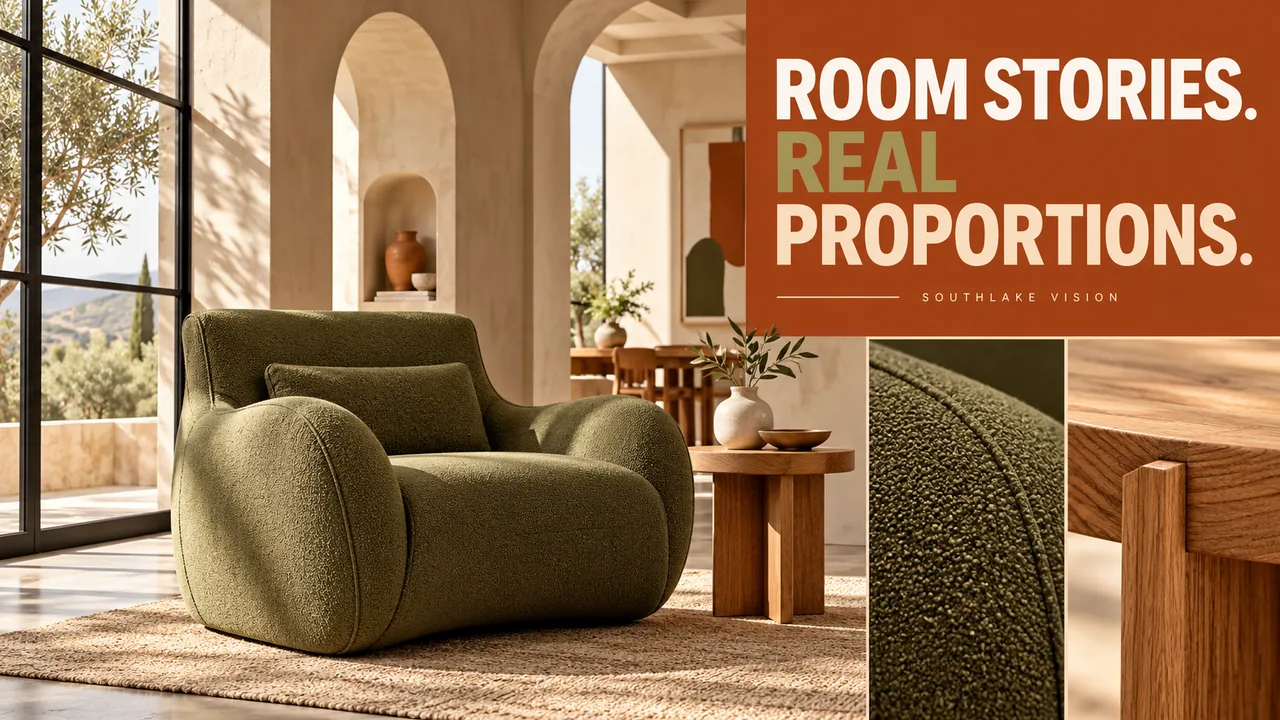
Original editorial cover illustration — Southlake Vision. Product imagery is illustrative.
Define the room story as a spatial relationship
Furniture photography in China for Shopify should make the piece feel at home without changing its apparent size. Begin by naming the spatial relationship the image must explain: a chair beside a table, a console along a wall or a sofa within a seating group. The room is useful when it clarifies that relationship, not simply because the architecture looks impressive.
For a hypothetical lounge chair, the brief might require a believable reading corner and a clear view of the seat depth. Record the chair's approved dimensions and identify the features that must remain visible. Southlake Vision can discuss a product led room treatment from those inputs. The photograph should be judged as a representation of furniture within space before it is judged as a decorative interior image.
Choose scale references that do not manipulate perception
A side table, lamp or rug can help communicate scale, but only when the objects have a credible relationship to the furniture. An unusually small lamp can make a chair appear oversized; a very large coffee table can make a sofa look compact. Select references intentionally and note their approximate proportions in the room plan. Their role is context, not a disguised measurement system.
Do not claim exact fit from a room photograph. If clearance or dimensions matter, provide verified values in a separate appropriate asset. Browse home and furniture portfolio examples to discuss spatial arrangements, while keeping your own sample specifications authoritative. This category contains varied home products and should not be described as one named furniture client project. Use it to identify relevant visual problems rather than inventing a production history.
Set camera position before filling the room
Camera placement changes the apparent relationship between near and far edges. A close viewpoint can make the front arm of a chair dominate while its back appears small. Moving the viewpoint and adjusting the composition may produce a more credible relationship than trying to correct distorted proportions later. Decide which face of the furniture carries the essential construction information and build the view around it.
Use a representative test before adding all the styling. Check verticals, the seat plane, visible leg lengths and the relationship to the floor. A dramatic campaign view can be intentional, but it should not become the only useful reference for the product. Discuss room and lifestyle photography in terms of these decisions rather than requesting a particular lens model as though equipment alone could guarantee truthful proportions.
Protect the room geometry without stretching the product
Walls, door frames and floor lines give viewers clues about perspective. Excessive convergence can make a room feel unstable, while aggressive correction can change the furniture shape if applied carelessly. Agree how the architectural lines should read and review the product after any perspective adjustment. A straightened wall is not a success if it silently widens the chair. Keep a test view with the principal product surfaces unobscured so the approver can compare proportions before props are added. Name the visible reference features, such as the arm length and seat edge, rather than relying on a general impression that the room feels more spacious.
Compare the room image with a more neutral product reference. Check the height to width relationship, cushion thickness and arm positions. Where the approved campaign composition intentionally exaggerates depth, retain complementary views that clarify the construction. The lifestyle portfolio can help discuss different levels of atmosphere, but the final decision should be tied to the piece's function and how the image will appear in the actual store.
Show wood as material rather than a repeated pattern
Wood can contain genuine grain and colour variation. Confirm whether the sample is solid wood, veneer, a printed finish or another specified surface before writing descriptive copy. The photographer can show visible characteristics but should not infer construction from appearance alone. Ask the product owner which variations are representative and whether different samples illustrate meaningful finish differences.
Use lighting that reveals the surface without allowing a reflection to hide every identifying detail. At proofing, check that retouching has not duplicated an attractive grain patch across unrelated panels or removed real joints. If a visible mark is a sample defect, resolve it explicitly. A cleaner image should not imply that natural variation is absent or that the product uses a different material from the one actually supplied.
Let upholstery retain credible softness and texture
Upholstery needs enough light direction to describe weave, pile and form, but a high contrast treatment can make ordinary fabric tension look like damage. Agree a representative cushion arrangement and inspect seams, corners and any directional nap before capture. Styling can make the furniture orderly without rebuilding its real silhouette or adding hidden volume that changes the perceived product.
Check the wider room and close details together. They should describe the same colour, texture and cushion structure even though their lighting emphasis differs. If a warm wall or rug introduces a colour cast, compare the product with an approved neutral reference. Avoid promising identical appearance on every screen. The objective is a controlled, faithful master and suitable exports, with real material detail surviving the final storefront presentation.
Test the composition in the Shopify theme
A room image that works as a wide desktop banner may lose its furniture on a mobile crop. Share the actual theme sections and planned text placement before the shoot. Identify the essential product boundaries and the surrounding context that can safely disappear. Some placements will need an alternative composition rather than another crop from the same tightly framed source.
Test representative proofs in collection cards, product galleries and campaign sections. Check whether the chair becomes too small in the grid, whether the seat remains visible and whether headlines overlap important details. Exact theme behaviour matters more than a universal image size recommendation. Record crop decisions against each placement so the upload team can reproduce them when additional furniture joins the collection.
Approve room credibility and material truth separately
Use a spatial review first: proportions, floor contact, surrounding objects and useful viewpoints. Then use a material review: wood identity, fabric texture, colour and construction. Finally inspect crops in the store. Separating these checks helps the team distinguish a styling preference from a product accuracy issue and avoids approving an appealing scene with an unnoticed proportion problem.
Send Southlake Vision the furniture dimensions, finish references and Shopify layout examples to begin a room photography brief. Include assembly status and the views that customers need to understand. The production workflow can connect the room test, material approval and final exports. A convincing furniture story comes from coherent space and faithful surfaces together, giving customers both atmosphere and a believable representation of the actual piece.
Frequently asked questions
Can a room photograph replace a dimension diagram?
No. Room context can suggest relationships but perspective and prop selection affect apparent scale. Use approved measurements for exact dimensions or clearance questions and keep the room photograph consistent with that factual information.
Should every wood surface look identical after retouching?
Not when variation belongs to the actual material. Confirm what is representative and distinguish defects from normal character. Retouching should improve clarity without inventing repeated grain or implying a different construction.
What if the desktop room image crops badly on mobile?
Test an alternative crop against the essential product boundaries. If the required context or furniture cannot survive, plan another composition. More resolution cannot recover a part of the room that was never photographed.