
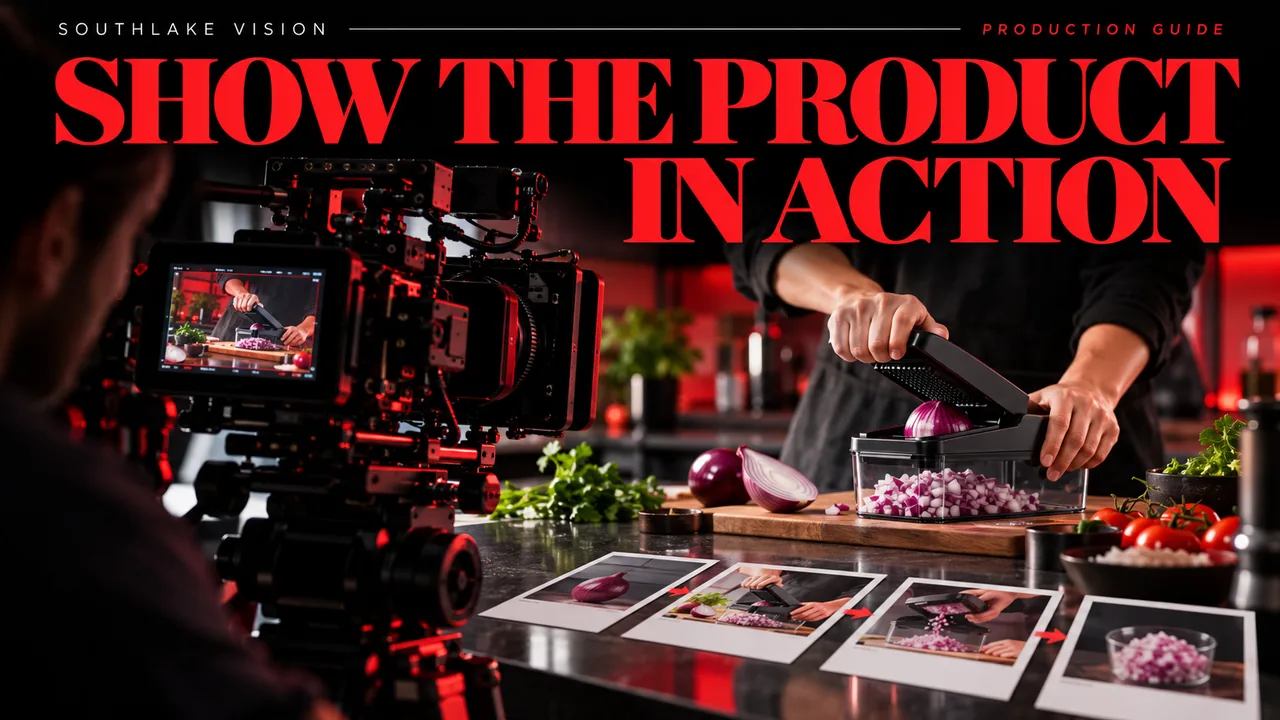
Original editorial cover illustration — Southlake Vision. Product imagery is illustrative.
Choose the explanation that needs movement
Amazon product video production should start with the reason a moving image is necessary. Opening, adjusting, assembling, pouring or switching between configurations can be easier to understand in motion than in separate photographs. Identify the action that matters to the customer and the uncertainty it resolves. A montage of attractive angles may look polished while leaving that uncertainty unanswered.
Review the existing listing messages and select a small number of demonstrable priorities. Each priority needs visible evidence rather than only a caption. Southlake Vision can build photography and video around a shared message map, but the video should earn its role by showing change over time. That focus keeps the shoot practical and gives the editor a clear basis for choosing useful footage.
Translate benefits into observable actions
A benefit statement needs to become something the camera can record. Instead of writing easy to use on a storyboard, specify the action: a hand removes the lid, places an item inside and closes the latch in a continuous view. The product owner should verify that the demonstration reflects normal intended operation and does not conceal important steps.
Create a message to shot table with columns for claim, action, camera view, necessary props and verification owner. Mark statements that cannot be demonstrated visually so the team can decide whether they belong in the film. The video production service can then plan coverage and equipment around real tasks. This is more reliable than filming broadly and hoping a persuasive story can be assembled afterward from whatever footage happens to exist.
Write a shot list that distinguishes proof from atmosphere
Separate essential demonstration shots from atmosphere and optional beauty shots. Essential footage shows the product's operation or important physical details. Atmosphere establishes context or brand tone. Both can be valuable, but they should not compete for time before the core explanation has been captured. Name the evidence that must remain visible in each essential frame.
For a hypothetical kitchen tool, the essential sequence might include preparation, the working action, the result and cleanup of a relevant removable part. A slow motion detail could enhance the film but should not replace a clear normal speed demonstration. Confirm which steps are appropriate and accurate with the product owner. If the scene uses food, liquids or replaceable consumables, plan sufficient materials for repeated takes without changing the depicted result.
Record continuity and product states
Video introduces continuity issues that still photography may not reveal. A container can appear fuller in one shot than the next; a dial can change position; a cable may disappear between views. Keep a continuity record covering product configuration, contents, control positions, wardrobe and props. Photograph the setup at important stages so the team can reset it reliably.
Identify the approved sample version and check moving parts before filming. A prototype with different controls can create problems if its footage is combined with current production photographs. If a demonstration produces irreversible changes, plan duplicates or a safe reset method. The production process can establish sample needs early, helping the studio avoid improvised solutions that make the final sequence less accurate or harder for a viewer to follow.
Capture sequences that remain clear without sound
A product video should be understandable when audio is unavailable. Use clear framing and logical action order before relying on voiceover. Captions can identify a step or draw attention to a verified detail, but they cannot compensate for footage that skips the essential interaction. Leave enough time for viewers to see what changes.
Sound can still improve the experience. A restrained music track, natural product sound or approved narration may support the story when appropriate and properly licensed. Confirm those elements in the scope rather than treating them as automatic extras. When reviewing a rough cut, watch once without audio and once with it. The silent pass reveals missing visual explanations; the sound pass reveals whether the audio supports the product or competes with the message.
Plan framing and edit versions before production
If the same shoot needs to support a product page, social advertising and short vertical clips, identify those outputs before filming. A wide master frame may not preserve the hand action in a tall crop. Capture alternative framing where necessary and keep important controls away from areas likely to be lost during adaptation.
Separate the Amazon delivery requirements from other channel needs. The seller should check current Seller Central video requirements and availability for the relevant marketplace and account. A reusable source library is valuable, but different placements may require different cuts or captions. Review related cutting board production examples to discuss how a practical product story can generate complementary assets. The actual output list should remain specific to the agreed project and platform checks.
Review the rough cut for factual sequence first
In the first edit review, check whether the actions are accurate, complete and in a sensible order. Confirm that the featured components match the current offer and that any before and after presentation is fair. Avoid approving a sequence that implies a result the normal product cannot achieve. Then review pacing, colour, captions and sound.
Provide feedback using time references and a clear reason. Replace the vague instruction make it faster with a specific observation, such as the opening delays the first useful demonstration. Consolidate client comments before the editor receives them. The scope should define deliverables and change handling. A clear rough cut review prevents later finishing work from hiding structural problems and helps distinguish a factual correction from a preference for a different creative approach.
Deliver a video package that can be maintained
Organise final videos by intended placement and version. Keep approved copy, music information where relevant and the product version record alongside the delivery. If source footage or editable project files are part of the agreement, specify their format and organisation. Do not assume that final film delivery automatically includes every underlying production asset.
Before upload, check the exported file rather than only the editing preview. Review captions, first and last frames, sound levels and any compression issues. The seller should complete the current platform requirement review. When the product changes, identify which shots need replacement instead of continuing to use an outdated demonstration. A useful product video remains a precise explanation of the item currently sold, supported by a production record that makes updates manageable.
Frequently asked questions
Does a product video need voiceover?
Not always. Clear action and concise captions may explain the product effectively. Voiceover is useful when it adds necessary context without repeating obvious visuals. Confirm language, script approval, recording and usage within the agreed scope.
Can the same film be used on Amazon and social media?
The footage may support both, but framing, duration, captions and technical requirements can differ. Define the outputs before the shoot and verify current platform requirements. A separate edit is often more useful than an automatic crop of one finished film.
How many samples should I send for video?
The number depends on wear, reset needs and the actions demonstrated. Share the proposed use sequence before shipping. Duplicates may be useful for irreversible demonstrations or repeated takes, but the studio should assess the specific product and production plan.