
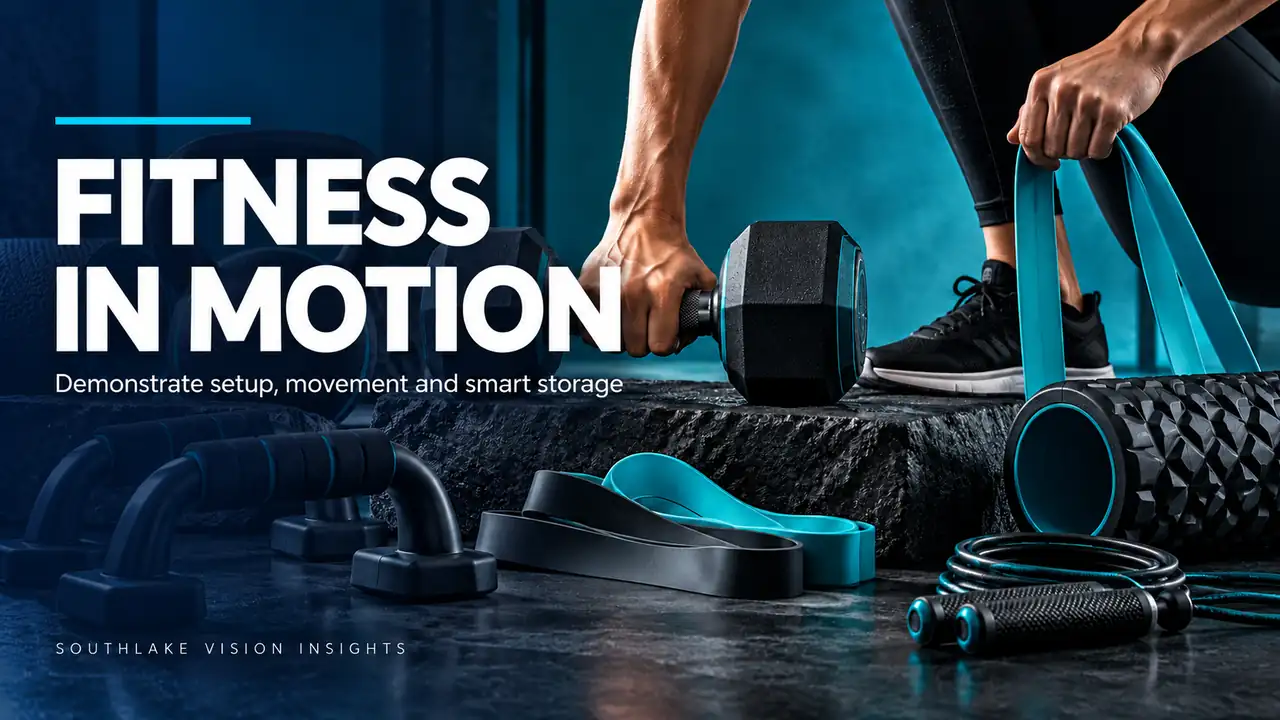
AI-generated editorial illustration. Not a Southlake Vision client project.
Tell the whole use cycle
A fitness product can look compelling in the middle of a movement while leaving basic questions unanswered. How is it assembled? Where do the adjustments sit? What occupies the floor when it is stored? A useful visual plan follows the product through setup, representative movement and storage rather than relying entirely on an energetic model.
For a fitness brand, these stages also require different camera decisions. Southlake Vision can combine explanatory product views with controlled demonstration footage, keeping the sample and its intended operation central. The goal is to make the item understandable without implying that a filmed exercise proves a training outcome or universal suitability.
Confirm the intended operation before casting
Obtain the product instructions, assembly sequence, adjustment options and relevant handling limitations from the owner. Identify whether the demonstration needs a participant familiar with the equipment or additional qualified supervision. Casting for appearance alone may leave the production unable to show the movement credibly.
Ask which operations are essential to the purchase decision. A folding bench might need adjustment and storage coverage more than a large variety of exercises. For a hypothetical resistance device, the anchor and connection sequence could be the most important explanation. Build the action list around the actual model rather than copying poses from unrelated equipment photographs.
Make setup visible through clear relationships
Lay out the included parts in a way that corresponds to assembly. Record the starting state and the completed state, then decide which connections deserve close coverage. Avoid compressing a meaningful step so aggressively that the viewer cannot understand where a component belongs.
Film a wider view of the main setup action, followed by clear details of locks or adjustments where appropriate. Our product video service can plan these complementary angles so editing does not rely on repeated jumps between unrelated close-ups. The finished sequence should explain the product, while the supplied instructions remain the authoritative source for operating it.
Choose movement that shows the equipment
Identify the specific feature that the action will reveal: range adjustment, handle position, platform movement or compact footprint. Place the camera where that relationship remains visible. A dramatic low angle may work for a campaign image but can obscure how feet, hands and moving parts relate to one another.
Rehearse at a controlled pace and agree the movement with the appropriate participant or supervisor. Do not ask the model to improvise a more extreme position for visual effect. Capture a stable beginning and ending so the editor can show the complete action without implying that disconnected moments belong to one continuous movement.
Preserve scale and body relationships
Keep enough of the participant and surroundings visible to explain the equipment’s proportions. A tight crop can make a compact item look larger, or hide the support needed for an action. Pair closer feature views with an establishing frame that gives the viewer an honest spatial reference.
Check perspective carefully on long frames and platforms. An overly close lens position can enlarge the nearest end and distort the perceived footprint. Review sport and fitness cases to discuss a suitable visual approach, then build the final camera plan around the actual dimensions and movements of the sample being photographed.
Plan storage as a separate demonstration
Storage images should show how the product reaches its stored state, not merely present a folded object that the viewer cannot connect to the working equipment. Record relevant releases and adjustments, with hands placed so the mechanism remains readable. Follow the product owner’s instructions for the actual operation.
Show the final footprint in a believable setting with adequate context. A product placed beside a sofa or cupboard may communicate scale, but check that the scene does not suggest an unsuitable storage position. If wheels, handles or detachable pieces affect moving and storing the item, capture them as distinct features rather than leaving the buyer to infer how it is managed.
Keep visual energy separate from performance promises
Use lighting, rhythm and confident direction to create an energetic presentation. Avoid treating sweat, exertion or a dramatic expression as evidence for calorie use, muscle gain or a health benefit. Those statements require support beyond a commissioned creative shoot and should not be invented in captions.
Show observable product characteristics instead: the adjustment setting used, the components included and the movement being demonstrated. If the brand supplies technical information, keep it linked to the correct model and approved wording. This gives the creative team a persuasive brief grounded in the product rather than asking the imagery to carry claims it cannot verify.
Build coverage for silent and mobile viewing
Many useful product explanations should remain understandable without narration. Allow time for an adjustment to be seen, add concise approved captions where necessary and keep essential hands and mechanisms inside the planned crop. Capture alternative framing where a vertical edit would otherwise cut out the product’s full movement.
Review stills and video together to remove gaps: clean product, setup, adjustment, representative use and storage should form a coherent sequence. Name files by action and sample version so a later editor cannot attach the wrong detail to the wrong model. Contact Southlake Vision with the instructions, dimensions and demonstration priorities to plan a fitness shoot that balances visual confidence with practical clarity.
Frequently asked questions
How many exercises should a fitness product video show?
Choose the number from the equipment’s actual buying questions and the available running time. One clearly filmed action can be more informative than several rapid fragments. Setup, adjustment and storage may deserve equal attention, especially when the item’s practical design matters more than a broad exercise montage.
Can the same footage be cropped for every platform?
Sometimes, but equipment and body movement often extend beyond a narrow crop. Plan important placements before filming and capture alternative camera framing where needed. A crop should preserve the relationship between the participant, support points and moving product components rather than merely keep the model’s face visible.