
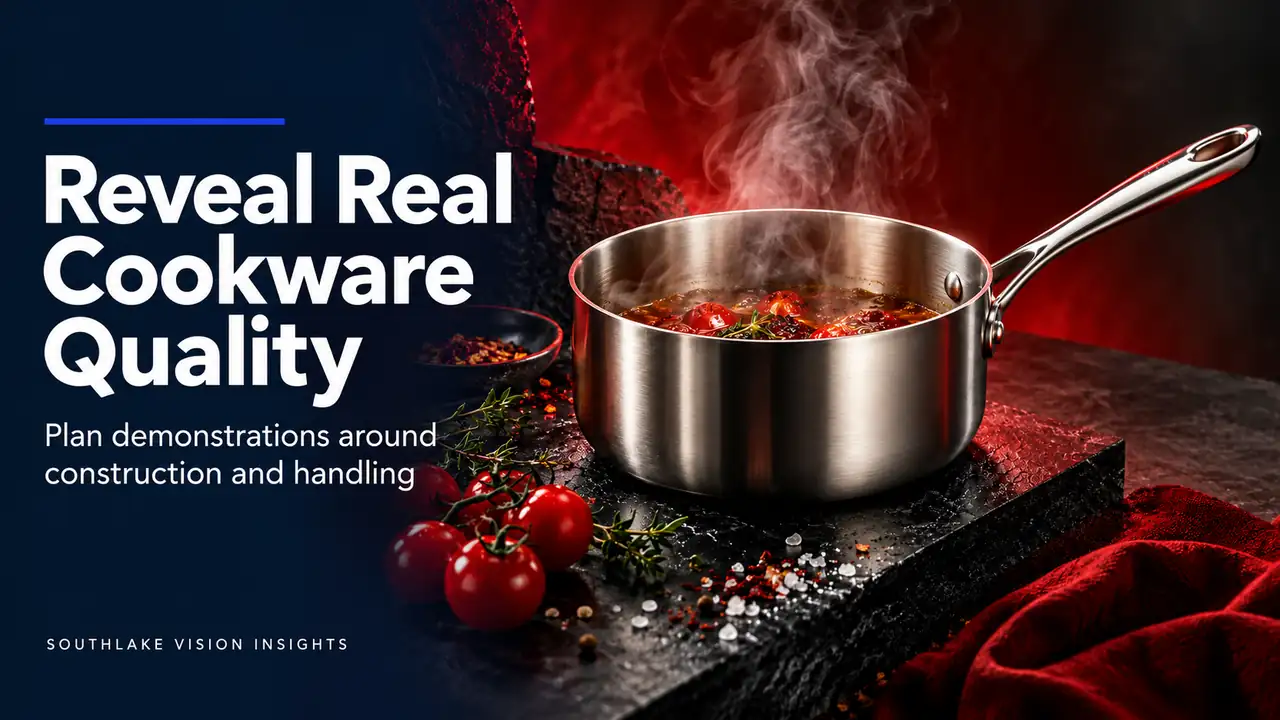
AI-generated editorial illustration. Not a Southlake Vision client project.
Let the demonstration reveal the design
A cookware brand needs more than appetising food beside a pan. Buyers want to understand the rim, lid, handles, cooking surface and the practical sequence of using the item. Those features are easier to communicate when the demonstration is designed around specific construction questions rather than a generic recipe montage.
At Southlake Vision, a useful starting brief identifies the exact cookware version, the action to show and the evidence the camera should capture. A food scene should support that information. It should not become a substitute for showing the product or suggest that an attractive dish verifies every performance claim attached to the listing.
Begin with a construction map
Ask the product owner to identify the components that distinguish this model: lid fit, handle attachment, wall shape, pouring lip or internal markings. Photograph them in a clean state before cooking. Record which details remain visible once food and condensation enter the scene.
Translate each feature into an observable view. A low side angle might reveal the depth of a sauté pan; a close view may explain how a lid seats. Avoid decorative cutaways that imply a hidden internal structure unless the manufacturer has supplied accurate technical information and approved the representation. Treat diagrams and actual product photographs as different kinds of evidence.
Choose a recipe for visibility
Select food because it reveals the pan’s use and leaves its important features visible. A very full vessel may conceal the interior shape. A sauce with uncontrolled splatter can distract from a handle or rim detail. Discuss the food quantity, colour and movement with the food stylist before purchase.
For a hypothetical shallow casserole, a modest quantity of vegetables could keep the side walls and handles readable during a stirring sequence. That is a creative example, not a recipe recommendation or a performance test. If the brand wants a comparison about cooking behaviour, define a separate, supportable testing approach instead of deriving the claim from a styled demonstration.
Choreograph handling before the surface becomes hot
Rehearse lifting, lid placement and utensil movement with a cool setup. Give the demonstrator a stable working area and clarify who controls the cooking process. The camera should not force an awkward grip merely because that angle exposes the logo.
Plan where hands enter and leave the frame, and where a removed lid rests. Confirm handling methods and product limitations with the owner’s instructions. Our product video service can capture this choreography through a combination of wider explanatory shots and close details, rather than relying on dramatic close-ups that obscure how the cookware is actually being handled.
Schedule the changing states
Cookware moves through clean, prepared, cooking, plated and cleaned states. Each state offers different information and may be difficult to restore instantly. Capture clean exterior views first, then dry handling and lid details, followed by the cooking sequence. Leave residue and cleaning coverage until the appropriate later stage.
Prepare a reset plan for interrupted takes. A sauce reduced over several attempts may no longer match the opening frame. Steam changes with temperature and timing, while condensation affects lid visibility. Continuity photographs and a simple take log help the editor distinguish compatible footage. A duplicate approved item can be useful, but its finish and branding must genuinely match.
Use reflections to describe the vessel
Polished metal reflects the studio, so its apparent shape depends on the light sources and surrounding surfaces. Broad gradients can explain curvature, while carefully positioned dark reflections distinguish rims and handles. Removing every reflection may make stainless steel appear flat or unnaturally plastic.
During cooking, preserve enough detail to see the vessel rather than exposing only for the food. Watch for bright highlights on lid knobs and oil-coated surfaces. Keep retouching boundaries clear: removing a temporary fingerprint differs from changing a permanent joint or coating texture. Review kitchen product cases to discuss visual direction, then test lighting on the actual sample.
Give still images and video different jobs
A still photograph can clearly isolate a lid detail or component relationship. Video can explain the sequence of placing, moving and removing that lid. Rather than copying every frame across both formats, build a coverage list that uses each medium for the information it communicates best.
Record a stable opening and ending around important actions so editors can create useful cuts. Capture clean frames with room for concise captions, but keep captions separate where localisation is expected. A silent viewing check reveals whether the action is comprehensible without narration. If the story becomes confusing, add a wider shot instead of more promotional text.
Review the demonstration against the actual offer
Before delivery, check the product version, included lid, utensils and accessories. A borrowed utensil may be an ordinary prop, but the composition should not imply it belongs in the package. Confirm which claims the brand has approved and remove copy that exceeds the available evidence.
Deliver an index connecting each image and clip to its intended purpose: construction, handling, cooking sequence or set contents. This is more useful than an unstructured folder of attractive footage. Contact Southlake Vision with the cookware sample specification and demonstration priorities to plan a shoot that communicates real design choices and practical use with a controlled, polished visual style.
Frequently asked questions
How much cooking should a cookware product video include?
Enough to make the selected product actions understandable. A short demonstration might show preparation, one representative action and a clear finished state without explaining an entire recipe. Choose the coverage from the product questions first, then determine how much cooking is needed to answer them.
Can steam and food styling prove a cookware performance claim?
No. They can make a demonstration visible and engaging, but an appealing image does not establish a measurable performance comparison. Keep the creative demonstration separate from testing evidence. Any technical claim used in captions should come from information the product owner can appropriately substantiate.